Linear motors for direct-drive positioning
JAT linear motors generate linear motion directly between the primary and secondary parts, making them direct-drive motor components for precision positioning. The portfolio includes iron-core PLM and ironless SLME linear motors with different force and speed ranges. SLME motors operate without cogging and without magnetic pull between the coil and magnetic track. PLM motors are documented for high positioning accuracy and have model-dependent magnetic pull. The product overview compares maximum force, rated force, maximum speed, length and maximum DC link voltage across 11 variants. For PLM, performance depends on the operating point at 325 V or 560 V. If your application requires guidance, a measuring system, end-limit sensors and other axis components, use JAT's separate linear axis systems.
The linear motors are also available as ready-to-connect linear axis systems LA115 and LA230.
Not sure which linear motor fits your application? Request a potential analysis or ASK ENGINEERING
Unfortunately, we do not currently have a motor in our product
range
that meets your
requirements.
However, one of our strengths is the realization of
customer-specific
products and solutions, so
that it
is always worth contacting our drive experts.
ontact now
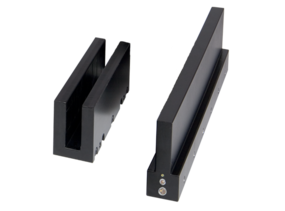
Compare iron-core PLM and ironless SLME linear motors
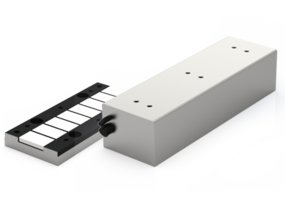
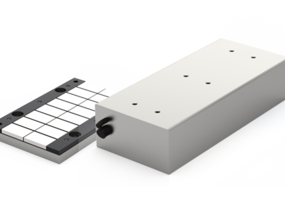
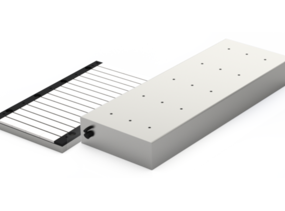
PLM and SLME cover different selection profiles. PLM are iron-core linear motors. SLME are ironless linear motors and operate without cogging or magnetic pull between the coil and magnetic track. PLM are documented for high positioning accuracy and have defined model-dependent magnetic pull. Compare force, speed, operating point and application requirements before selecting a motor.
Selection criterion | PLM | SLME |
|---|---|---|
Product family | PLM-025, PLM-050, PLM-100 | Ironless SLME |
Positioning or motion characteristic | High positioning accuracy | Very constant speed |
Cogging | Not stated as cogging-free | No cogging |
Magnetic pull | Model-dependent, 1333 to 10240 N | No magnetic pull |
Maximum force in current product grid | 245 to 2329 N | 164 to 650 N |
Rated force in current product grid | 141 to 975 N | 33 to 124 N |
Maximum speed in current product grid | 2 to 20 m/s | 7 to 26.5 m/s |
Max. DC link voltage | 560 V | 560 V |
(Note:) Values shown reflect the current product grid. For PLM-100, force and speed depend on the 325 V or 560 V operating point. PLM continuous-force values are subject to the thermally conductive mounting conditions stated in the data sheets.
Compare speed, peak force and continuous force
Speed and force are key selection criteria for a linear motor. The current product grid spans 164 N to 2329 N maximum force and 2 m/s to 26.5 m/s maximum speed. JAT data sheets use Peak force and Continuous force, while the current website fields use Maximum force and Rated force.
For high-speed linear motor selection, the required force level and operating point must be considered together. PLM continuous force must be assessed with the documented thermally conductive mounting condition. PLM-100 also has different operating points at 325 V and 560 V, so model-specific technical data determines the correct selection.
Direct-drive linear motors and complete linear axes
A linear motor is the drive component that creates direct linear motion. Guidance, measuring systems, end-limit sensors and other mechanical axis components are not part of this motor category. If an application requires a complete ready-to-connect positioning system, JAT offers separate linear axis systems and direct linear axes.
Servo amplifiers for linear motors
For a linear servo motor, the servo amplifier must match the motor, DC link voltage and required current. The motor data sheets document ECOVARIO 414 for 325 V operating points. For PLM, 560 V operating points are specified with ECOVARIO 616. ECOVARIO 616D is listed on the data-sheet covers as an appropriate servo amplifier.
If you are searching for a linear motor driver, JAT uses the product term servo amplifier. See servo amplifiers for linear motors for current devices, interfaces and control functions.
Applications for linear motors
JAT links linear motors with applications including pick and place, cutting, focusing, dispensing, inspection and marking. The appropriate motor depends on required force, speed, operating point and overall system design. PLM data sheets also state suitability for gantry applications.
Downloads and technical documentation
Technical data sheets for PLM-025, PLM-050, PLM-100 and SLME contain model data and dimensional drawings. They support checks of force, speed, operating point, dimensions, primary parts and secondary parts.
Frequently asked questions about linear motors
What is a direct-drive linear motor?
A direct-drive linear motor creates linear motion directly between its primary and secondary parts. It does not require a mechanical transmission to convert rotary motion into linear motion. JAT's category contains PLM and SLME motor components with different force and speed values. Selection is based on peak or maximum force, continuous or rated force, speed and operating point.
What is the difference between iron-core and ironless linear motors?
PLM motors are iron-core linear motors, while SLME motors are ironless. SLME operate without cogging and without magnetic pull between the coil and magnetic track. PLM are documented for high positioning accuracy and have defined model-dependent magnetic pull. Force, speed and thermal conditions vary by model, so selection should use the specifications of the individual product.
Which linear motor is suitable for high-speed positioning?
The suitable high-speed linear motor depends on both the required force and the operating point. Maximum speeds shown in the current product grid range from 2 m/s to 26.5 m/s. PLM-025-192-3HE is listed at 20 m/s, while SLME-025-244-000 is listed at 26.5 m/s. PLM-100 speed also varies between documented 325 V and 560 V operating points.
What is the difference between peak force and continuous force?
Peak force is the short-term force value stated in the motor data sheets, while continuous force is the corresponding continuous-duty value. The current JAT website presents these fields as Maximum force and Rated force. For PLM, continuous-force values apply with the documented thermally conductive mounting condition. PLM-100 force values can also vary with the 325 V or 560 V operating point.
Which servo amplifier is needed for a JAT linear motor?
The required servo amplifier depends on the motor, DC link voltage and required current. JAT motor data sheets document ECOVARIO 414 for 325 V operating points. For PLM, 560 V operating points are specified with ECOVARIO 616 and ECOVARIO 616D is listed on the data-sheet covers as appropriate. The exact motor and amplifier combination should be checked for the selected model and operating point.
What is the difference between a linear motor and a complete linear axis?
A linear motor is the drive component for direct linear motion. A complete linear axis also includes mechanical guidance and can include a measuring system, end-limit sensors and other axis components. If those elements are required as a ready-to-connect system, JAT's separate linear axis systems and direct linear axes are the appropriate starting point. This keeps motor selection separate from complete axis design.